
Business
How Central Bank Policies Shape Stocks, Bonds, and Real Estate in Today’s Market

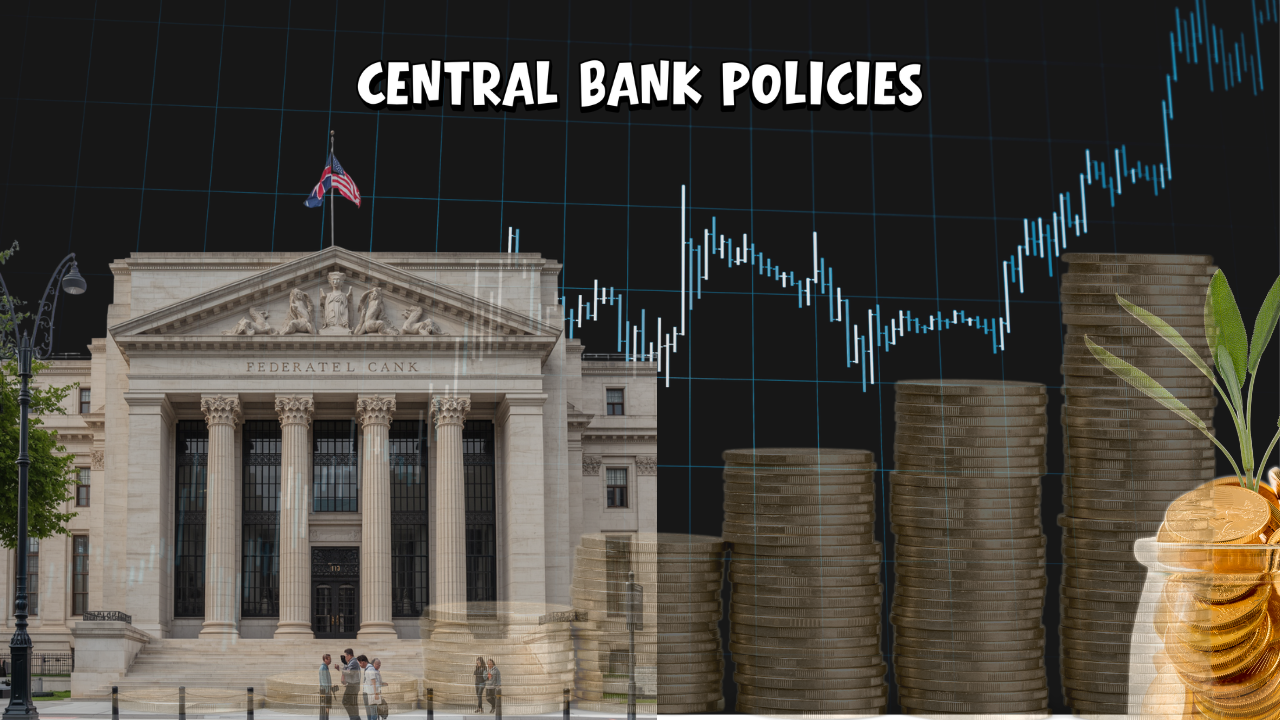
Are you curious why central bank meetings affect stock prices, or do you think mortgage rates are affected by decisions made across the globe? Many people do not realize how much central bank policies, such as interest rates and other monetary tools, have an impact on the prices of all assets in the world today.
This blog will identify the effects of monetary policy on stocks, bonds, and real estate by looking at central bank decisions which are usually made by a nation’s central bank such as the US Federal Reserve Bank. Anyone who has an interest in investing should read this guide to understand how money affects all forms of investment.
What Central Banks Do
The objectives for a country’s monetary policy include achieving broad economic objectives such as controlling inflation; providing support for employment; ensuring financial stability. Central banks primarily achieve these goals through adjusting the short-term rate of interest on money, buying and selling government bonds; providing forward guidance regarding prospective monetary policy actions. All three of these actions have direct impacts on the cost of borrowing, return on investment, and on the overall economy.
Interest Rates as the Main Tool
The main way that central banks can change the economy is by adjusting their primary monetary policy tool; the interest rate. When a central bank raises or lowers their indicator interest rate, this has a direct effect on the amount of money that banks can borrow and the cost they incur to do so. As a result, changes in interest rates impact many types of loans to businesses, consumers, corporations, and other entities and the market value of financial assets.
If you raise rates, that means it’ll be more expensive to borrow money; therefore, people won’t borrow as much so they won’t spend as much, leading to lower inflationary pressures (at least temporarily). Conversely, if you lower rates this makes it less expensive for people to borrow money; therefore, people will borrow more which leads them to invest more and spend more leading to greater economic growth. Shifts in interest rates will have an impact on all different types of investments since everything relies on cash flows and valuations being based on the cost of money.
The Value of Stocks is Based on Central Bank Policies
Equity or stocks are a way to share ownership of a company, which represent an investment in that company’s future expected profits and risk. Lower interest rates tend to raise stock price as companies can now borrow at a lower cost and invest in their growth thereby increasing their future earnings. Equities are then seen as a more attractive investment as compared to low yield bonds as well.
Higher rates can reduce stock valuations because future earnings are discounted more heavily, and borrowing costs increase. Growth companies that rely on cheap debt are often most affected.
The importance of central bank communication (commonly referred to as “forward guidance”) is well established; in addition to reacting to changes in rates, the market also responds to indications of both future policy. While predictable guidance can help reduce volatility in the financial markets (in other words, give investors confidence), unexpected or abrupt changes in guidance can result in substantially higher than normal volatility on the part of investors and/or the financial markets, and will typically add to the uncertainty associated with investing.
How Policies Affect Bonds
The interest rates have a big affect on bond yields and priced. When the Interest is high, you will receive less for each of your previous bonds. When the Interest is low, you will sell your previous holdings for a greater amount than you would have in a higher Interest environment.
Long term bonds have high sensitivity to changes in interest rates. Investors like to measure the sensitivity of bonds to interest rate changes by using the duration of bonds, when the bond has a longer maturity, the price will change larger due to the changes in interest rates.
Central Bank Policies and the Effects on Real Estate
Real estate is a form of investment and also a form of leveraged acquisition therefore it has a high sensitivity to changing interest rates. Mortgage rates often fluctuate in accordance with Central bank policies and higher interest rates lead to higher mortgage costs and reduced demand for both residential and commercial real estate. When rates are lower it is more affordable to borrow money which leads to increasing demands and prices for residential and commercial real estate.
Investors in commercial property use cap rates to gauge the value of the investment. When cap rates rise, property values decrease; whereas when cap rates compress, they lead to a higher value for the property. Economic sentiment continues to have an influence on how the marketplace reacts to low interest rates, which are favourable for construction and investment. On the other hand, higher interest rates tend to slow down the construction of new projects and/or make investors less enthusiastic about investing in real estate projects.
Other Central Bank Tools
Beyond the base rate, central banks can also use alternative mechanisms. For instance, through quantitative easing, a central bank will regularly purchase significant quantities of government debt to encourage liquidity to flow through the financial ecosystem. This should create upward pressure on bond prices and downward pressure on yields and push people to seek out either equities or properties as viable investment alternatives. Additionally, forward guidance can shape market projections while simultaneously reducing the level of uncertainty, even if there are no immediate policy shifts occurring.
Quick Summary
When interest rates drop, the stock market tends to rise as investors are encouraged to invest; on the other hand, if interest rates increase, the stock market declines because investors have less incentive to raise their investment levels in stocks. When interest rates drop, bond prices tend to increase, and when interest rates increase, bond prices tend to decrease. Demand and valuation of real estate tend to increase when the interest rate decreases as compared to when it increases. By understanding these relationships, an investor can predict the behavior of the financial markets and make better decisions.
Commonly Asked Questions
Q: Are central banks able to directly set stock market prices?
A: No, but the policies of central banks affect things such as the cost of borrowing, the ability of investors to take risks and the expectations of investors and therefore indirectly affect the value of stocks.
Q: Can the price of real estate increase when interest rates are high?
A: Yes, but there must be strong local demand, increasing incomes and limited supply to offset the costs from increases in interest rates; although the costs of getting financing will usually be higher when interest rates are higher.
Q: Are bonds always safe when rates fall?
A: Falling rates tend to raise bond prices, but long-term bonds are more sensitive. Inflation expectations can still affect returns.


Why Are Investors Cautious in 2026?
Investors remain cautious in 2026 as the global economy navigates a slower recovery, stickier inflation, uncertain interest rates, rising energy costs, geopolitical tensions and corporate earnings While some markets are doing well, many buyers are avoiding aggressive monetary turnarounds.
Introduction
Global markets in 2026 are not exactly in panic mode, but they are definitely not relaxed either.
Stocks have shown moments of strength. AI-related companies are still getting attention. Some economies are growing. Central banks are trying to stay calm. But behind the surface, investors are asking one big question:
Is this growth strong enough to survive another shock?
That question explains why global investors remain cautious. The market is not only looking at today’s numbers.The same is true of looking at what will go wrong the following month, in the next area, or within 12 months after that.
According to the IMF’s outlook for April 2026, global growth is expected to gradually reach around 1% in 2026 before rising to just under 3.2% in 2027, while headline inflation is expected to rise modestly in 2026 before easing again in 2027. no.
1. Inflation Is Still Making Investors Nervous
In 2026, inflation is projected to be one of the most important reasons why retailers are cautious.
In recent years, companies and customers have already been treated to higher prices. Even if inflation decreases, costs generally do not return to vintage levels quickly. It puts pressure on households, businesses and governments.
For retailers, inflation matters because it affects almost the entire sector:
Higher inflation can reduce consumer spending. It can increase business costs. It can emphasize the benefits to the organization. It could also push important banks to keep interest rates higher for longer.
In simple terms, inflation makes it harder to anticipate the future.
Therefore, investors are watching energy prices, food tariffs, wages and the reactions of key financial institutions very closely. Even a small inflation miracle could quickly parallel market expectations.
2. Interest Rates Are Still Uncertain
Investors love clarity. In 2026, they won’t benefit much from hobby spending.
Central banks are trying to balance risk. If they cut spending too quickly, inflation could rise once again. If they continue to spend too much for too long, the monetary incentive can be extra weak.
This creates a difficult environment for investors. Low interest rates often help stocks, real estate, startups, and business expansion. Higher rates generally make borrowing extra steeply priced and can reduce demand for food financing.
Recent business and corporate news shows that most important central banks are cautious. The Bank of England kept its required interest rate unchanged at three.Seventy-five%, while important banks including the US Federal Reserve, the Bank of Japan and the European Central Bank, were also defined to keep quotes consistent when assessing global uncertainty .
The cautious approach to banking sends a clear signal that policymakers are not yet fully confident.
And if the most important banks are cautious, investors as a whole will be cautious too.
3. Energy Prices Are Creating Fresh Market Pressure
Energy tariffs and all other fundamental reasons why the global market will remain sensitive in 2026.
Oil and gas taxes affect transportation, manufacturing, transportation, cooking and family bills. When electricity rates fall upwards, the cost stress spreads throughout the economy.
Recent geopolitical tensions in the Middle East have made oil prices considerably better. Reuters says Brent crude rose above $120 a barrel, and analysts raise oil price forecasts on almost widespread concerns about turmoil in global markets
For buyers, this creates two problems.
First, better oil prices can restore inflation. Second, they are able to reduce agent costs because companies are also willing to pay extra for shipping, manufacturing, and supply chains.
That’s why markets are usually scared when electricity prices push up quickly. It’s not just an oil market story. It’s becoming a global business story.
4. Geopolitical Risk Is Hard to Price
Markets can handle bad news when it is measurable. But geopolitical risk is tricky because it can shift overnight.
War, change stress, supply chain disruptions, sanctions, distribution channel problems, and diplomatic disputes can all affect global markets. The challenge is that retailers cannot accurately predict how long those crises will last.
This uncertainty often results in “risk-averse” behavior. This method allows investors to funnel cash away from volatile assets to safe alternatives, which are cash, cash, formation bonds, gold, or even defensive stocks .
Even as inventory markets push upward, many traders remain cautious, understanding that a key geopolitical update could quickly change the mood.
5. Corporate Earnings Are Mixed
Another purpose is to make buyers aware that employer profits are not equally strong in all areas.
Some tribal companies, especially those working in AI, cloud computing, and semiconductors, are still appealing to investors’ interests. However, various industries have faced pressure from high prices, weak demand, high-value credit and uncertain consumer spending.
This creates a smooth market.
In 2026, investors aren’t buying everything. They are more selective. They want institutions with strong cash flow, electricity prices, low debt and clean growth plans.
That’s why micro is more important in today’s market.
6. AI Is Exciting, But Investors Want Results
AI remains one of the biggest business goals in 2026. Companies are spending billions on data centers, chips, cloud infrastructure, and AI tools .
But buyers are asking a sensible question:
When will this spending turn into real profit?
AI can improve productivity, customer service, content creation, software development, healthcare, finance, and many other industries. But huge AI investment also comes with huge costs.
Some investors are excited about long-term growth. Others worry that valuations may already be too high.
So, while AI is keeping parts of the market strong, it is also adding another layer of uncertainty.
7. Consumers Are Still Under Pressure
A strong market wants strong buyers.
If people spend a little fortune, companies earn extra. If humans cut costs, the company’s revenue may decrease.
But in 2026, many consumers face exorbitant housing costs, expensive loans, rental stress, and an uncertain business market. This affects areas such as retail, tourism, restaurants, accommodation and shoppers.
Investors watch buyer reports carefully because they show whether the economy is definitely healthy or just supported through a few strong sectors.
8. What This Means for Businesses
For organizations, prudential markets suggest making plans more important than ever.
Companies need to be aware of currency floats, price manipulation, buyer retention and a smooth process. This is not always a good time to best rely on offensive lines. The business must be smart, realistic and prepared for unexpected changes.
Small businesses can also benefit from this environment by using automation, increasing online visibility, reducing unnecessary fees, and building more powerful consumer relationships .
Companies that thrive on uncertainty are generally no longer high. They are maximally adaptable.
9. What This Means for Investors
For investors, 2026 is a year for patience.
That does not mean avoiding the market completely. It means being selective. Investors are focusing more on fundamentals, diversification, risk management, and long-term value.
Instead of chasing every trend, many investors are asking:
Can this company survive higher rates?
Can it protect profit margins?
Does it have strong demand?
Is the valuation reasonable?
Can it perform even if the economy slows?
These questions are shaping investment decisions across global markets.
Conclusion
In 2026, global markets are concerned because the arena economy will continue to manage too many mobile elements. Inflation is not fully manipulated down. Interest rates remain uncertain. Energy prices are volatile. Geopolitical crises are big. AI investments are interesting yet luxurious. However, consumers are under stress.
The top news is that cautious no longer means poor. It is certainly legitimate for buyers to be wary.
However, markets may develop in 2026, but the easy-cash setting is far from over. This year’s retailers have meaningful strong groups, real income, a smart approach and clear value.
The message to retailers, businesses and general readers is simple:
FAQs
1. Why are global markets cautious in 2026?
Global markets are cautious because investors are worried about inflation, interest rates, energy prices, geopolitical tensions, and slower economic growth.
2. Is 2026 a bad year for investors?
Not necessarily. It is a more selective year. Investors may still find opportunities, especially in strong companies with stable earnings, good cash flow, and long-term growth potential.
3. How do interest rates affect global markets?
Higher interest rates make borrowing more expensive. This can slow business growth, reduce consumer spending, and lower investor appetite for risky assets.
4. Why do oil prices matter for investors?
Oil prices affect inflation, transport costs, manufacturing, airline profits, shipping, and consumer spending. When oil prices rise sharply, markets often become more cautious.
5. What sectors are investors watching in 2026?
Investors are closely watching AI, technology, energy, healthcare, consumer goods, banking, and defensive sectors that can perform during uncertain economic conditions.
Read more trending blogs from all categories on BlogsPlanet.


 Entertainment1 month ago
From Season 4 Explained: Ending, Monsters, Theories & What Comes Next
- Artificial Intelligence1 month ago
How AI is changing daily life in 2026
- Entertainment1 month ago
Inside the Lives of A List Stars in 2026: Red Carpets & Social Media Scandals
- Fashion1 month ago
The Best Men’s Accessories to Make Any Outfit Look Better in 2026
- Gaming1 month ago
GTA 6 Trailer 3 Update | Why Fans Think Rockstar’s Next Reveal Is Coming Soon
- Business1 month ago
Global Markets in 2026 | Why Investors Are Still Cautious
- Sports1 month ago
Hybrid Training Explained | Combining Strength, Cardio, and Mobility
- Sports1 month ago
Why Football Fans Are More Passionate Than Ever in 2026